
The Illusion of the Hardware-Store Deadbolt
Walk down any residential street and most front doors rely on the exact same defense: a keyed knob, a single residential deadbolt, and occasionally a brass chain. While visible hardware may deter casual opportunists, security professionals know standard pin-tumbler locks offer surprisingly thin resistance against anyone intent on entering.
Mass manufacturing relies on standardized tolerances, shallow pin stacks, and limited bitting combinations to keep retail prices low. Because millions of locks share identical cylinder geometries, an attacker rarely needs specialized stealth or excessive force to bypass a conventional front door quietly.
- Mass-produced keyways restrict key-combination variety, occasionally creating duplicate keys across neighborhoods.
- Keyed-alike knob and deadbolt sets allow a single bypass technique to defeat both latches simultaneously.
- Short 1-inch deadbolts anchored into thin pine door jambs split effortlessly under a single forceful kick.
How Lock Bumping, Picking, and Drilling Bypass Standard Doors
Two quiet cylinder attacks dominate residential lock bypass: bumping and manual picking. Lock bumping uses a specially cut key filed to maximum depth; inserting the bump key and tapping it lightly with a rubber mallet transfers kinetic energy to the driver pins, momentarily clearing the shear line so the cylinder turns in seconds without attracting attention from neighbors.
Manual lock picking using tension wrenches and rakes requires modest practice yet opens common household cylinders quietly in under a minute. Less patient intruders simply drill straight through brass cylinders with a cordless bit—producing ordinary construction noise while destroying standard pins.
- Bump keys and simple tapping tools operate rapidly with noise indistinguishable from routine yard maintenance.
- Precision pick sets open low-tolerance residential cylinders silently without leaving forced-entry damage.
- Unshielded brass cylinders surrender quickly to handheld cordless drills.
Why Rekeying After a Break-In Is Never Enough
Following a burglary or misplaced key, homeowners routinely hire a locksmith to rekey existing cylinders. While rekeying invalidates old physical keys, it leaves the exact same low-security cylinder design, thin strike plate, and wooden door frame intact.
If an intruder bypassed the previous lock via bumping, picking, or prying—or if the jamb itself failed—fresh brass pins change nothing. True remediation requires upgrading the entire door-and-frame system rather than swapping shallow cylinders inside a vulnerable slab.
- Rekeying only stops someone holding a stolen copy of the previous key, not cylinder-manipulation tools.
- Thin residential frames still flex and split under pry bars regardless of new cylinder pins.
- Comprehensive defense demands synchronized upgrades to cylinder armor, bolt geometry, and steel jambs.
Multi-Point Steel Locking Bolts, Anti-Drill Armor, and Keyless Intelligence
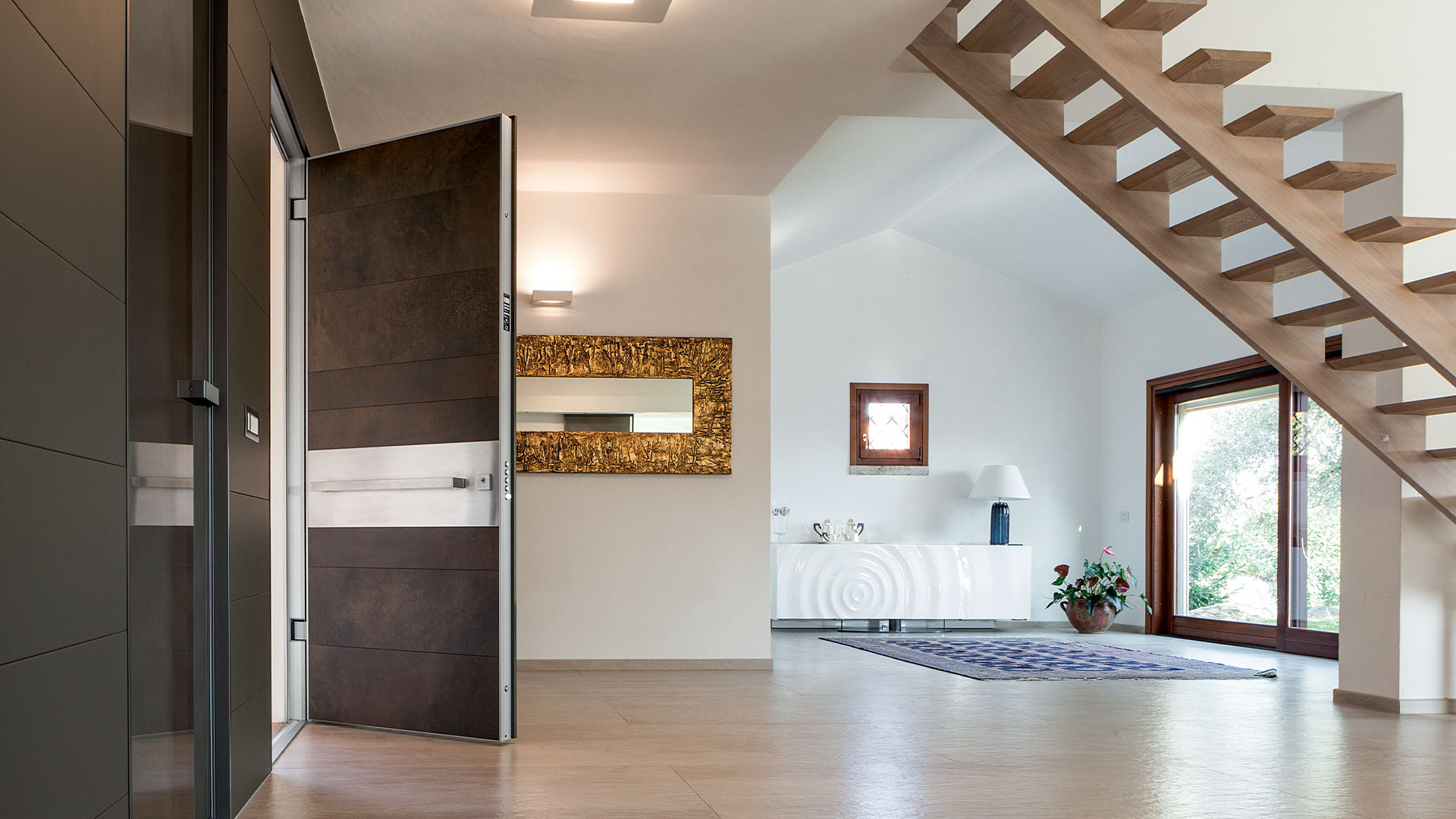
Don't let the breathtaking beauty fool you — behind every bespoke finish is serious, high-level structural security. Featuring Oikos Security Doors engineered in Italy, true armored doors eliminate single-point vulnerabilities by driving heavy steel bolts simultaneously into the lock jamb, upper header, and floor threshold, paired with fixed hinge-side dog bolts.
High-security cylinders sit shielded behind hardened manganese-steel anti-drill plates and require factory-registered ownership cards before authorized key duplication can occur. For homeowners preferring zero physical keys, motorized smart-lock technology pairs encrypted biometrics or proximity transponders with automatic multi-point deadbolting—eliminating both cylinder exposure and unlocked-door mistakes.
- Multi-point steel bolts anchor the door slab across all four perimeter edges, resisting pry bars and impact.
- Hardened anti-drill defenders and restricted high-security keyways defeat bump keys, picks, and cordless drills.
- Motorized smart-lock technology removes exterior keyways altogether when paired with biometric or mobile credentials.
Whole-Assembly Integrity: Frames, Hinges, and Storm-Rated Certification
Even the finest lock cylinder fails if mounted in a hollow slab or anchored into soft residential wood framing. True physical protection treats the lock, slab, hinges, and structural subframe as one unified mechanical system. Internal heavy-gauge steel ribs prevent door flexing under hydraulic spreaders, while concealed heavy-duty hinges or balanced pivot bearings keep attackers from removing external pins.
In coastal and urban high-rise residences alike, DVJ Consulting LLC pairs forced-entry metallurgy with certified life-safety performance—including Miami-Dade HVHZ NOA hurricane impact ratings and UL 120 two-hour fire-rated options. Behind timeless handmade Italian craftsmanship sits structural engineering built to outlast both quiet cylinder tampering and violent physical assault.
- Continuous steel subframes bolted into concrete or masonry eliminate weak wooden jamb splitting.
- Fixed hinge-side security bolts keep the door anchored even if exterior hardware faces direct attack.
- Optional Miami-Dade HVHZ NOA and UL 120 certifications combine forced-entry armor with severe-weather and fire protection.