
The Gap Between Intrusion Detection and Physical Prevention
Most homeowners begin thinking about residential protection by installing motion sensors, sirens, and exterior cameras. While electronic monitoring excels at notifying a phone or dispatch center after a perimeter is crossed, sensors do nothing to slow down someone standing inside the foyer. Worse still, complex alarm zones are frequently bypassed or switched off when family members, pets, and staff are moving around at home.
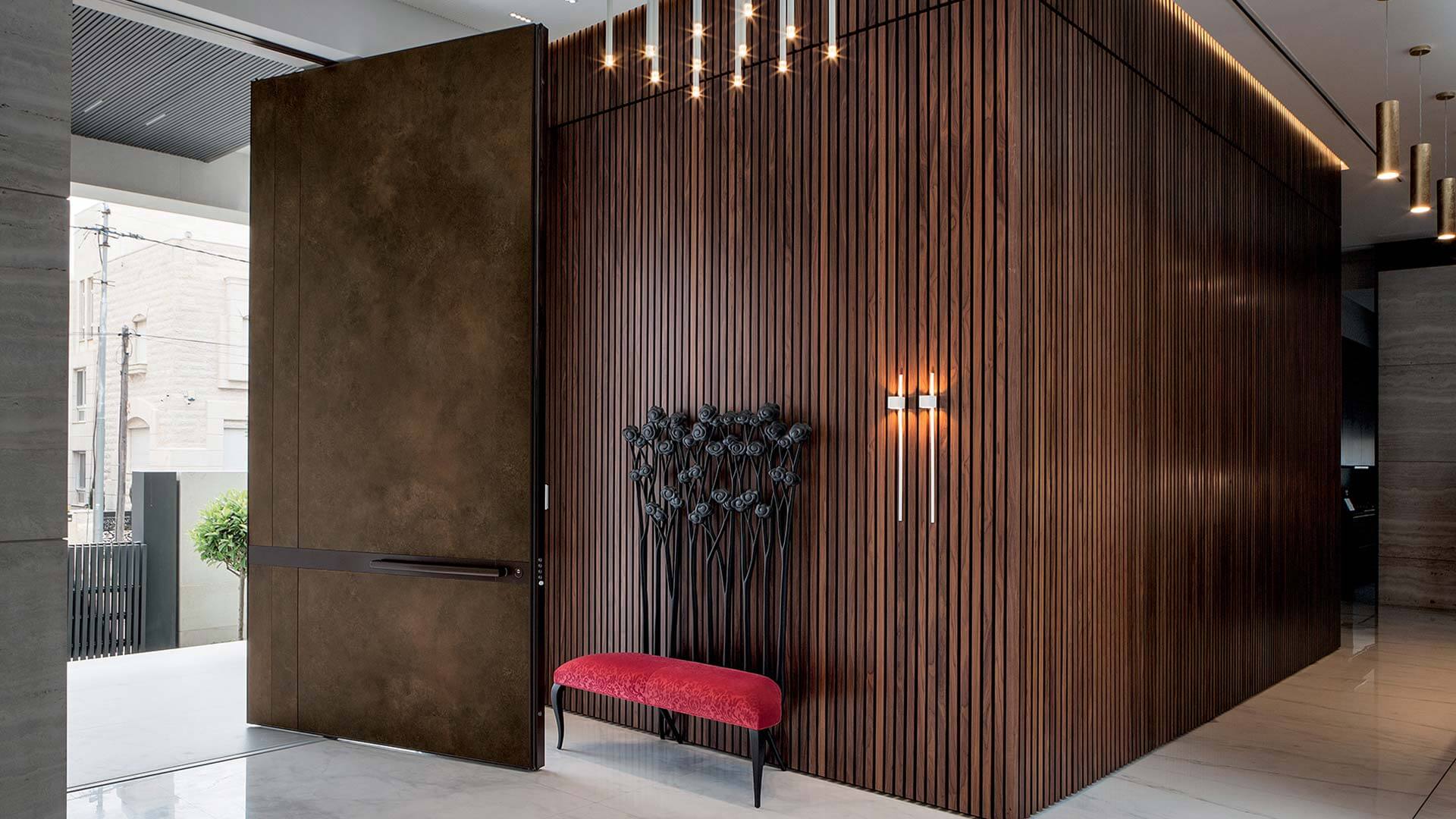
A fortified door-first strategy flips that priority by placing unyielding physical strength at every vulnerable entry point. Featuring Oikos Security Doors, heavy-gauge steel armor concealed inside bespoke residential facades absorbs violent impact before an alarm even needs to escalate. Don't let the breathtaking beauty fool you — behind every bespoke finish is serious, high-level structural security.
- Alarms notify after a breach occurs, whereas armored doors prevent unauthorized entry from taking place.
- Default auto-locking removes human error so entrances never remain inadvertently unlocked overnight.
- Physical delay at the perimeter gives occupants and responders decisive time during emergencies.
- Concealed structural reinforcement integrates smoothly without turning the property into a visible bunker.
Auditing Every Vulnerability Across the Property Perimeter
Effective residential fortification begins with a thorough architectural audit rather than a generic hardware package. Security specialists evaluate lot lines, sightlines from neighboring parcels, exterior lighting, and every pedestrian or vehicular entry into the building envelope. Often, the front door receives the greatest attention while secondary openings remain dangerously under-built.
Garage-to-residence doors, side service entries, mudroom portals, and broad rear patio sliders frequently offer secluded cover for tampering. Reinforcing garage passages with UL 120 fire-rated armored assemblies adds vital flame separation alongside forced-entry resistance, while fortified glass sliders and steel-core side doors seal the entire ground-level perimeter uniformly.
- Assess main foyers, rear terrace sliders, side service doors, and attached garage entryways as one connected perimeter.
- Upgrade garage-to-home thresholds with UL 120 fire-rated steel-core doors to block both forced entry and vehicle-bay fires.
- Evaluate secluded perimeter corners where foliage or courtyard walls obscure exterior visibility.
- Coordinate structural wall framing adjacent to door jambs so hinges and strike plates anchor into solid substrates.
High-Precision Locking Cylinders and Multi-Point Bolt Engineering
Even a heavy steel door leaf can be undermined if its locking core is vulnerable to picking, drilling, or key duplication. High-security architectural doors rely on certified European-profile security cylinders shielded behind hardened manganese anti-drill plates, paired with non-duplicable key card control and sealed Owner's Keys handed directly to the homeowner.
Inside the door leaf, that cylinder—or an encrypted motorized actuator—drives multiple hardened steel deadbolts simultaneously into the perimeter frame. With multi-point hardened steel locking bolts and fixed anti-pry perimeter bolts working in concert, forced-entry attacks at any corner encounter rigid steel engagement rather than a single shallow latch.
- Certified European-profile security cylinders sit protected behind hardened manganese anti-drill defenders.
- Separate construction-site keys and factory-sealed Owner's Keys protect keyway custody through final handover.
- Ownership security cards prevent unauthorized key duplication without verified owner credentials.
- Hardened anti-drill shields and multi-point steel bolts protect the entire perimeter of the door leaf.
Unified Management Without Cluttered Interfaces
Physical strength works best when paired with clear, effortless oversight. Modern motorized smart-lock technology links door status sensors directly to an intuitive mobile interface or dedicated wall touch panel, allowing homeowners to verify whether every exterior and interior security door is closed and bolted in a single glance—whether upstairs at midnight or traveling abroad.
By combining real-time door telemetry, audit logs of scheduled entries, and uncompromising Italian mechanical engineering, homeowners replace guesswork with quiet confidence. Every finish remains refined, every operation remains simple, and every threshold works continuously to keep the household safe.
- Verify closed and locked status across every fortified entry from a dedicated touch panel or smartphone.
- Receive instant alerts if an unauthorized access attempt or prolonged door-ajar condition occurs.
- Configure time-bound credentials for domestic staff, contractors, or guests without issuing physical keys.
- Maintain dependable mechanical and battery backups so power interruptions never compromise perimeter security.