
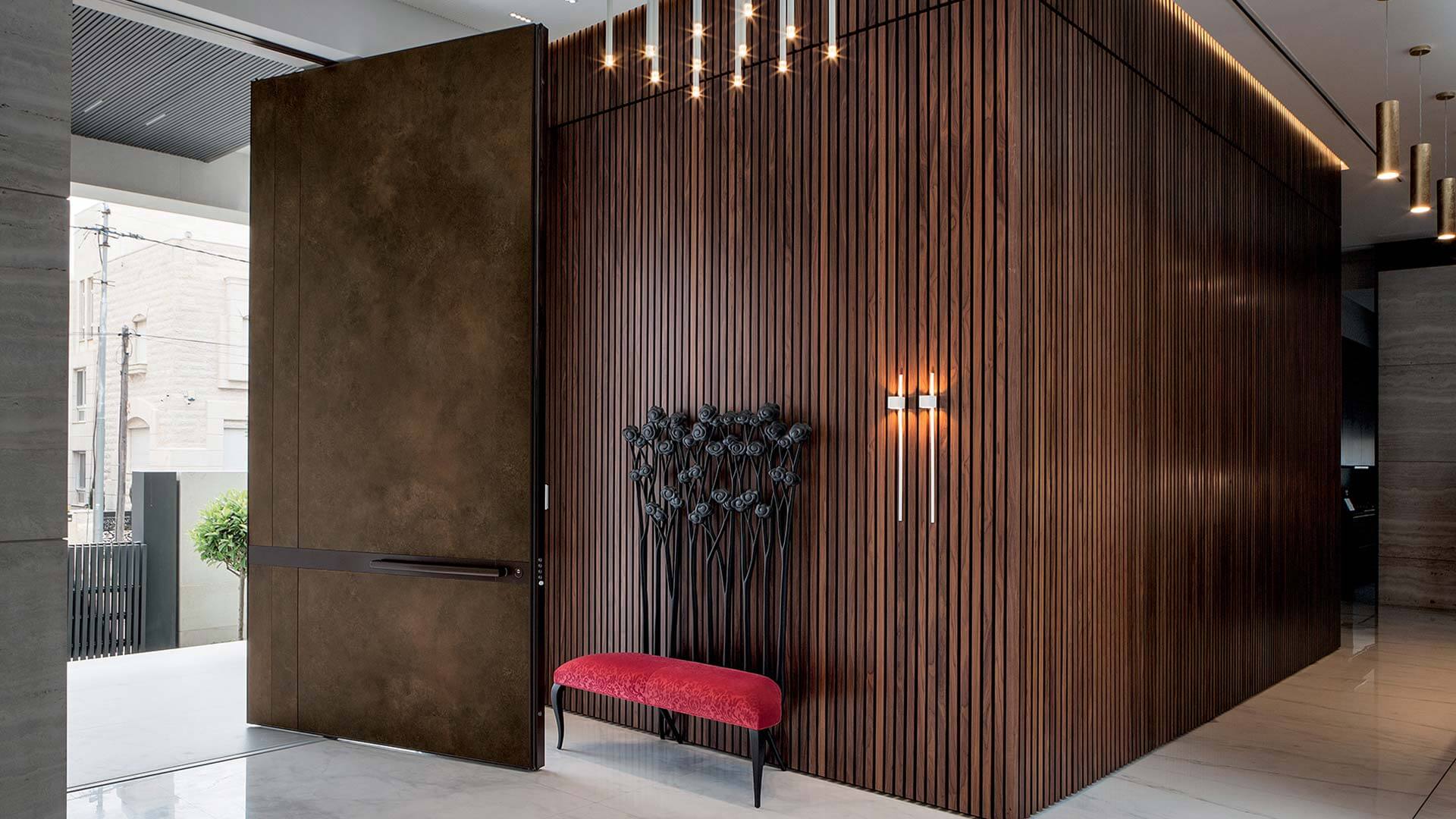
Why Armored Architectural Doors Demand Specialized Installation
A standard residential entry door can often be unpacked from cardboard and set in place by two finish carpenters in an afternoon. Bespoke security doors operate in an entirely different mechanical class. Built around welded heavy-gauge steel frames, solid-core internal armor, laminated glazing, and motorized multi-point locking hardware, a single completed leaf and sub-frame assembly frequently weighs between 250 and 1,200 pounds.
If that mass is anchored into an out-of-plumb rough opening, rigged carelessly without surface protection, or sealed with improper perimeter compounds, both performance and warranty integrity suffer. Especially on coastal Miami-Dade HVHZ NOA or UL 120 fire-rated projects, fastener spacing, structural substrate density, and perimeter sealants must satisfy strict engineering tolerances.
- Structural openings require solid concrete, steel, or engineered multi-inch framing surround
- Plumb, level, and square rough-opening verification is mandatory prior to delivery
- Specialized rigging or piano-grade moving equipment prevents finish damage during placement
- Dedicated power and low-voltage data conduits must be pre-pulled before frame setting
How Builder-Led Basic Coordination Works on Ground-Up Projects
On new luxury estates or major architectural retrofits, homeowners typically already retain a general contractor, site superintendent, and licensed electrical team. Under a basic coordination structure, that established site crew handles rough-opening preparation, old-door demolition on remodels, rigging into position, perimeter anchoring, and final casing carpentry according to manufacturer technical specifications.
Factory-trained technical specialists remain closely involved throughout the sequence—reviewing structural shop drawings in advance, advising on specific sealants and anchor bolts, and guiding final commissioning either on-site or via live technical video link. For experienced estate builders who prefer retaining direct control over local trade scheduling and municipal inspections, this collaborative model integrates seamlessly into master construction schedules.
- Ideal for ground-up estates with an active general contractor and site management team
- Local trades handle municipal permitting, rough framing, and regional code compliance
- Technical specialists verify power continuity, motor calibration, and locking bolt alignment
- Retains full client control over preferred local carpenters, riggers, and electricians
When Turnkey Concierge Coordination Saves Time and Risk
Replacing an entry door or fortifying a primary suite inside an already-finished residence presents very different logistics. Without a general contractor on retainer, homeowners rarely want to vet rigging crews, source licensed electricians to fish low-voltage power into the jamb, coordinate stucco or drywall patching, and schedule finish trim carpenters across four separate appointments.
Concierge installation coordination lifts that burden off the homeowner or estate manager. Through DVJ Consulting LLC, project coordinators assemble vetted local specialists—from delicate rigging teams and licensed electricians to finish carpenters—aligning every trade around a tightly sequenced installation schedule so the occupied residence experiences minimal disruption.
- Designed for occupied estates and single-portal upgrades lacking a dedicated general contractor
- Unified scheduling across demolition, electrical rough-in, heavy rigging, and finish carpentry
- Careful protection of surrounding marble floors, bespoke millwork, and finished interiors
- Single point of technical accountability from crated arrival through final lock commissioning
Pre-Installation Checklist: Electrical, Rigging, and Commissioning
Regardless of which coordination tier fits the project, successful installation depends on disciplined preparation at least 48 hours before specialists arrive. Featuring Oikos Security Doors ship with frame-concealed motorized actuators and optional biometric or smart-access hardware, meaning line-voltage power, battery-backup continuity, and network or dry-contact smart-home leads must terminate cleanly at the specified jamb pocket.
Once the steel sub-frame is anchored and the leaf is hung, commissioning verifies every mechanical and digital safeguard: smooth pivot or hinge sweep, effortless multi-point bolt throw without rubbing, safety-edge obstruction reversal on motorized doors, and accurate biometric or keypad credential enrollment.
- Confirm rough-opening dimensions, floor-slab levelness, and structural backing depth beforehand
- Verify concealed power and communication wiring prior to setting the steel sub-frame
- Coordinate certified rigging crews for unloading, uncrating, and delicate interior transport
- Complete full mechanical, electrical, and smart-access stress testing before signing off
Local Permitting, Code Compliance, and Post-Installation Finish Work
Another advantage of partnering with local licensed trades—whether hired directly by a builder or coordinated through concierge oversight—is mastery of municipal inspection protocols. Coastal counties, historic preservation districts, and high-rise condominium boards each enforce distinct permitting checklists, wind-load affidavits, and acoustic or fire-rating sign-offs that regional contractors navigate daily.
After the steel sub-frame is anchored, commissioned, and signed off, local finish artisans complete any custom exterior stucco returns, stone reveals, or interior wood casings around the perimeter. Dividing structural door engineering from final architectural trim ensures every trade operates at peak craft without compromising protective tolerances.
- Local contractors navigate municipal building permits and regional inspection rules efficiently
- Retrofits benefit from regional knowledge of older wall assemblies and concealed utilities
- Finish carpentry, stone returns, and stucco patching complete seamless architectural reveals
- Clear commissioning sign-off protects hardware alignment and long-term performance